.png)
The Right Time to Use a Push Back Pallet System
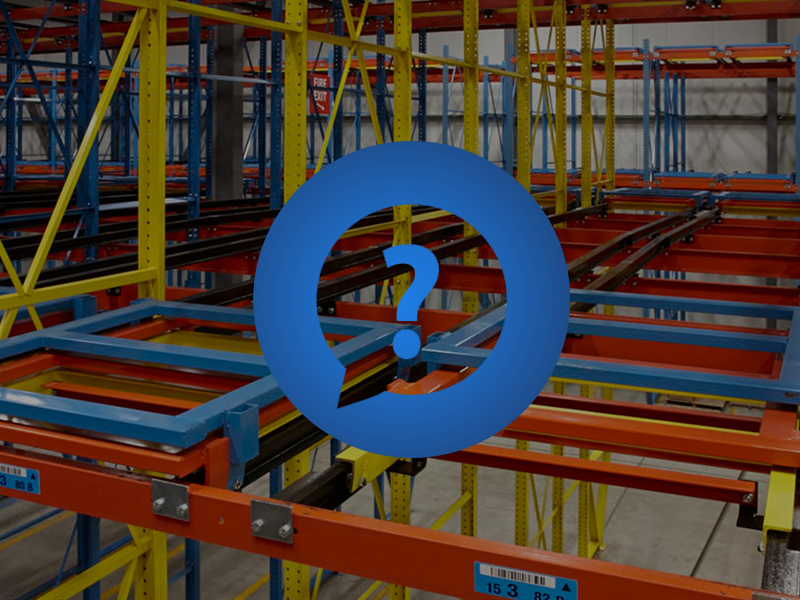
A push back pallet system is one of the most effective storage solutions for warehouses looking to increase capacity, improve productivity, and reduce rack damage. Designed with inclined rails and nested carts, this system allows pallets to move smoothly using gravity while keeping forklifts safely outside the rack structure.
When a new pallet is loaded, it gently pushes the previous pallet backward along the rails. Then, during unloading, pallets automatically slide forward into the picking position. As a result, operators spend less time maneuvering equipment and more time moving product.
Because forklifts never enter the rack, facilities often experience less structural damage and lower long-term maintenance costs.
Key Advantages of a Push Back Pallet System
Implementing a push back pallet system offers significant operational benefits, especially in warehouses with high product turnover or limited space.
Major advantages include:
Increased storage density without expanding your footprint
Faster loading and unloading processes
Reduced labor demands for forklift operators
Minimal rack damage due to exterior access
Low maintenance thanks to sealed bearings and coated wheels
Additionally, lanes can be configured to maximize vertical space, helping warehouses fully utilize their cubic storage capacity.
Best Situations for Push Back Racking
Although many facilities can benefit from this system, certain warehouse environments see the greatest return on investment.
High-Volume Inventory
Warehouses managing large quantities of similar SKUs gain efficiency because pallets remain accessible at all times. Instead of relocating blocking pallets, operators can retrieve inventory immediately.
Faster Stock Rotation
While the system naturally supports LIFO inventory management, it can also be organized strategically to support controlled rotation. Clearly labeled lanes help operators quickly identify where to load and retrieve products.
Maximizing Rack Occupancy
Traditional pallet racks often leave unused gaps while waiting for incoming shipments. In contrast, push back racking keeps lanes consistently filled, ensuring storage space is never wasted.
Reducing Honeycombing
Although some managers worry about honeycombing, a well-designed push back pallet system actually minimizes unused storage. Assigned locations make overflow areas easy to identify, keeping inventory organized and accessible.
Features That Improve Warehouse Performance
Beyond storage benefits, push back racks are engineered for durability and flexibility.
Strong construction supports both heavy and lightweight loads
Smooth-rolling carts allow effortless pallet movement
Optional accessories help separate products and control flow
Adjustable configurations adapt to changing inventory needs
Because of this versatility, businesses rarely need to redesign their storage layout as product profiles evolve.
Is a Push Back Pallet System Right for Your Warehouse?
If your facility is running out of space, handling high pallet volumes, or looking to improve operational efficiency, a push back pallet system may be the ideal solution. By combining dense storage with easy access, it supports safer workflows while helping your warehouse scale without costly expansions.
Investing in the right racking system today can position your operation for long-term growth, improved productivity, and lower operating costs.
Speak with a storage expert to determine whether push back racking is the right fit for your facility.